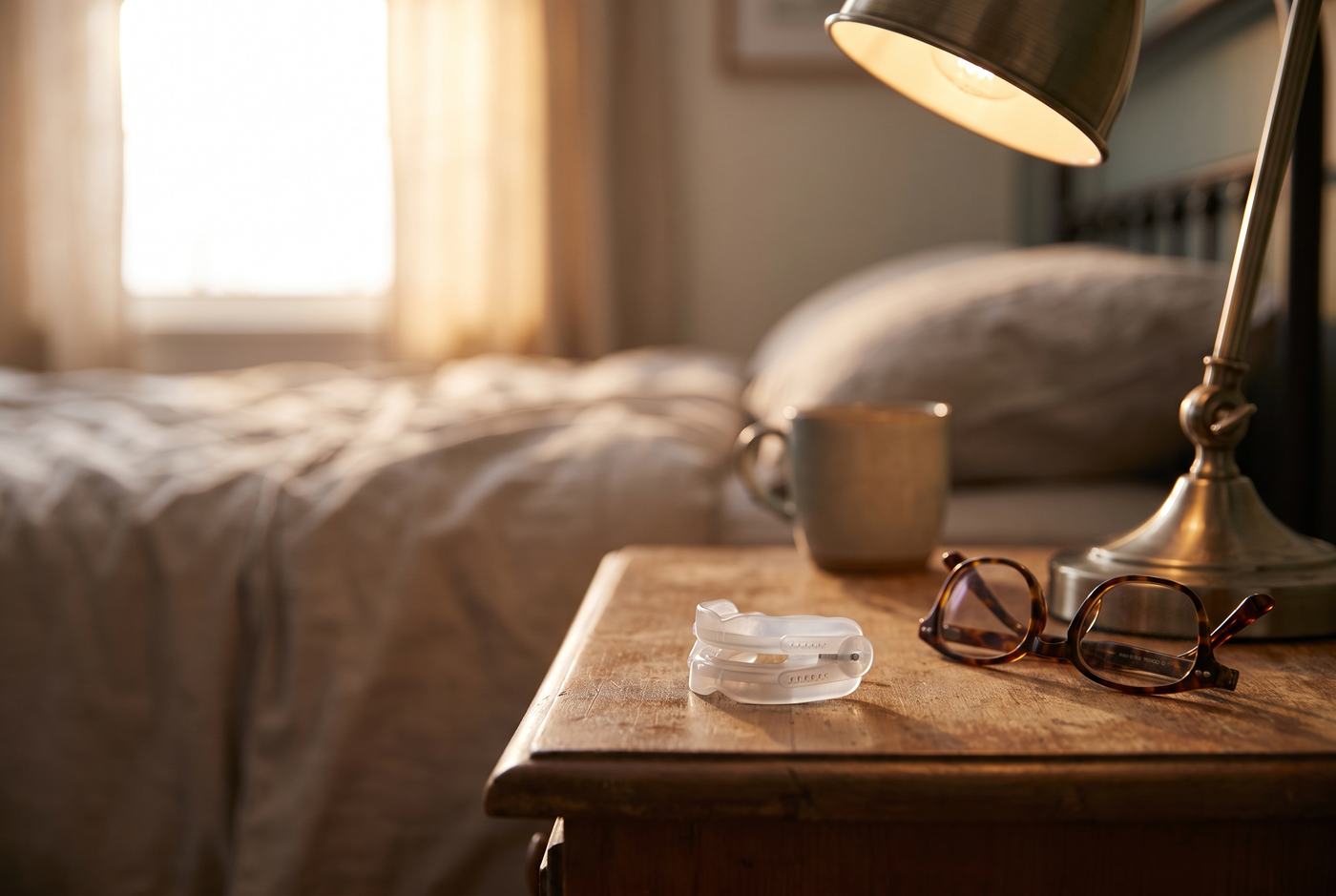
“What a Rogue Dentist Just Revealed About the Billion-Dollar Sleep Industry Will Shock You”
For 28 years, he built the custom mouthpieces the dental industry calls the “gold standard” for snoring. Now, he’s risking his own practice to tell exhausted spouses the truth about the $2,000 piece of plastic sitting on his lab bench.
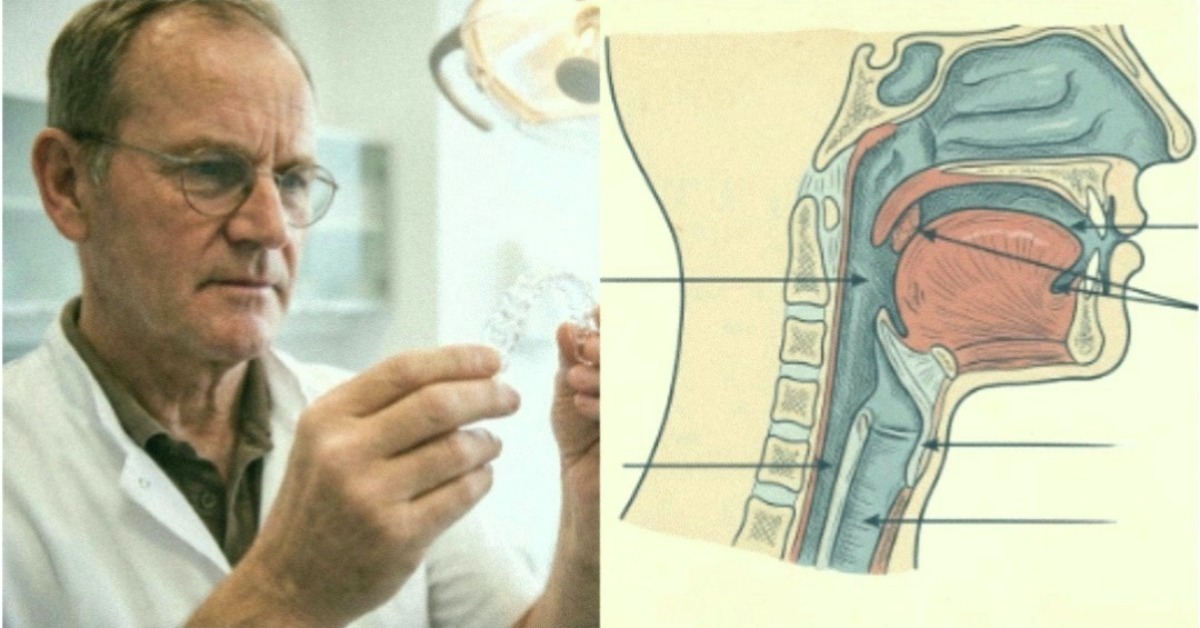
The dentist slides a small arc of clear acrylic across his lab bench. It’s lighter than a house key. It looks like something you’d buy in the sports aisle at Target.
“Between $1,500 and $2,000,” he says, his voice flat. “Depending on the lab and how many times I have to adjust it.”
Then he drops the bombshell that made us drive all the way to Ohio to meet him.
“For about half the people who sit in my chair begging for one of these... I tell them to put their wallets away and start somewhere else.”
You won’t read his real name here. That was his one non-negotiable condition. The dental labs and colleagues he works with make their living off the very mouthpiece he’s about to expose. We agreed to call him Dr. R.
He sat down with us to explain the millimeters, the money, and the massive markup that’s keeping millions of couples trapped in separate bedrooms.
The Dirty Secret of the “Sleep Divorce”
Dr. R., 61, has run a suburban Ohio dental practice since 1998. He never set out to be a snoring specialist. But over the years, he’s fitted hundreds of custom mouthpieces—devices designed to hold a sleeper's jaw slightly forward to keep the airway open.
The conversation almost never starts as a medical consultation. It leaks out during routine cleanings, usually whispered by a desperate spouse the second the hygienist leaves the room.
“A wife will sit there, exhausted, and ask about her husband's snoring instead of her own teeth,” Dr. R. explains. “She’s been staring at the ceiling at 2:00 AM for years. She’s running out of polite ways to say she can’t take it anymore.”
The statistics are terrifying. According to the American Academy of Sleep Medicine, half of U.S. couples have resorted to a “sleep divorce”—fleeing to separate beds or guest rooms just to survive the night.
But it’s not just the relationship that’s dying. Chronic snoring is often a red flag for obstructive sleep apnea, a condition that increases the risk of heart failure by 140% and stroke by 60%.
“When people love each other but dread bedtime together, something has to change,” Dr. R. says. “But the industry’s solution is to hold their sleep hostage for two grand.”
Treating the Wrong Organ (And Fleecing the Patient)
Why do the drugstore strips and sprays always fail?
“Because they’re treating the wrong organ,” Dr. R. says bluntly. “Strips open the nose. In almost every snorer I examine, the nose isn’t the problem.”
Here’s the terrifying biological reality: When you sleep, the muscles controlling your jaw go slack. The jaw drifts backward. The tissue at the back of your throat collapses inward. As you force air through that narrowed gap, the tissue vibrates violently. That’s the chainsaw noise destroying your marriage.
The cheap drugstore gimmicks aim at the nose. The earplugs aim at the victim.
The only thing that actually targets the root cause—holding the jaw forward—is the mouthpiece Dr. R. builds. And it sits behind a massive, four-figure paywall.
“The acrylic is cheap,” he admits. “What you’re paying for is me. The impressions, the lab fees, the endless adjustment visits. It prices out the vast majority of households that desperately need it.”
And that’s what finally broke him.
“A wife hears the $2,000 quote, goes home to ‘think it over,’ and a year later, she’s still sleeping in the guest room. The quote didn’t fix the snoring. It just ended the conversation.”
The $55 “Threat” to the Dental Establishment
Dr. R. started noticing a trend. His patients kept asking about adjustable mouthpieces sold online. Tired of dismissing a product he’d never actually held, he ordered the one that kept coming up: a $54.99 device called SnoreRX.
He set it on his lab bench right next to his $2,000 custom jobs.
“I turned it over, looking for the corner they cut,” he says. “I couldn’t find it.”
“The material takes a true, custom impression of the teeth using hot water. But the real threat to my industry is the calibrated adjuster. It moves the jaw in precise, one-millimeter increments. That’s the exact same unit of measurement I use in my clinic.”
He pauses, letting the reality sink in.
“I have seen lab invoices larger than $54.99 just for a single remake of a custom guard. My profession does not enjoy that comparison. Which is exactly why patients are never told about it.”
SnoreRX bypasses the middlemen and sells directly to the public—which is exactly where Dr. R. now sends the exhausted wives who sit in his chair.
Millimeters, Not Miracles
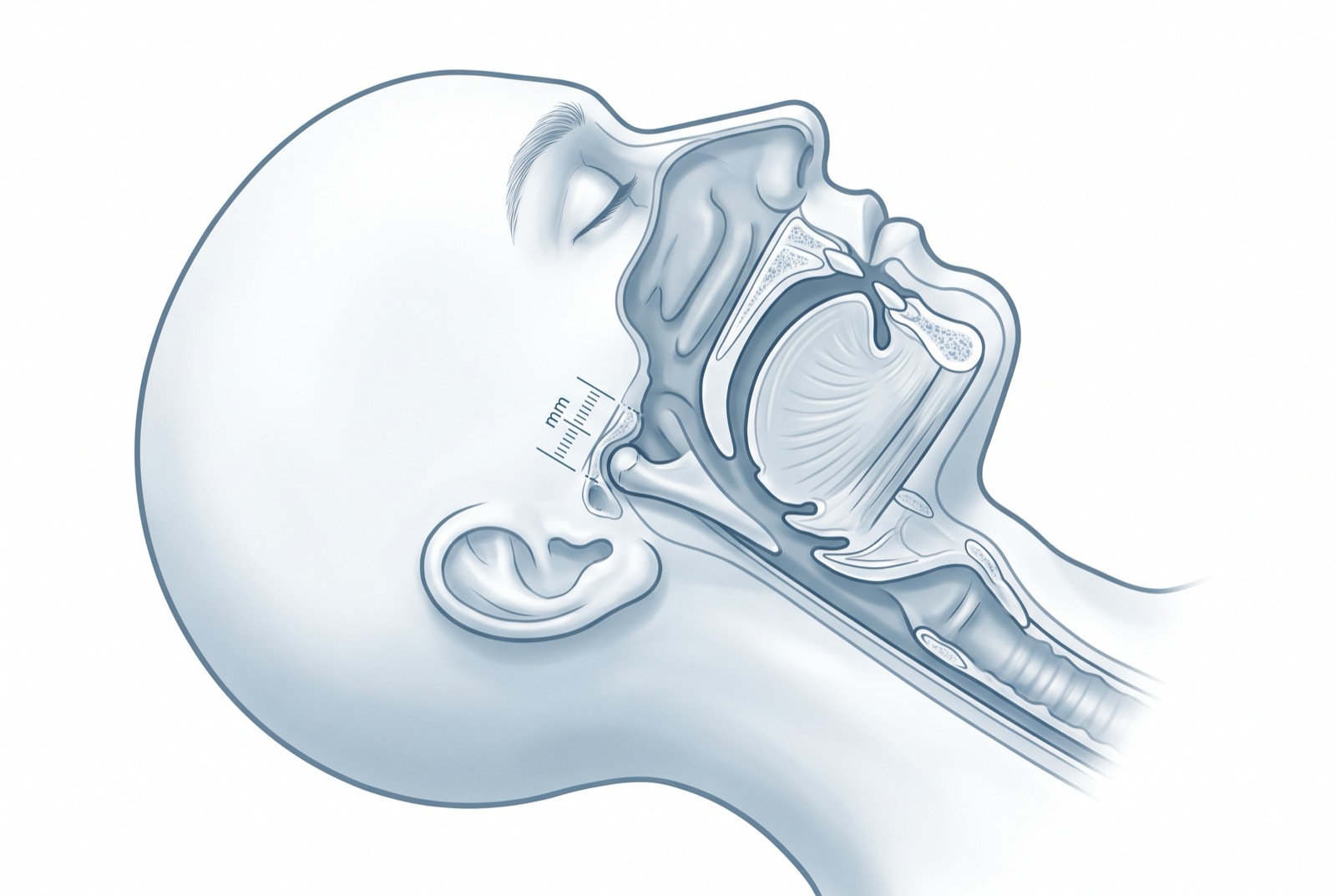
The science isn’t magic. Both the $2,000 device and the $55 device do the exact same thing: they bring the jaw forward by a few millimeters so the throat stops collapsing and the air passes quietly.
The difference is how you get there.
Dr. R.’s version requires expensive dental impressions, a milling lab, and multiple costly visits.
The SnoreRX takes its impression in your kitchen. You soften the material in hot water, bite down, and it records your unique dental footprint.
But the adjuster is what makes Dr. R. tell his patients to skip the clinic.
“When I tune a custom mouthpiece, I hunt for the quiet setting a millimeter at a time. That’s what you’re paying me for,” he explains. “This device hands that dial directly to the patient.”
He doesn’t sugarcoat the reality. Your teeth might feel a little sore the first few mornings. But as he points out, that’s the exact same “cost of entry” for his $2,000 custom guards.
Escaping the Guest Room
Since Dr. R. started quietly recommending the at-home version, the feedback hasn’t been about millimeters or acrylic. It’s been about survival.
It’s about the first silent night in years. It’s about moving back into the master bedroom.
“Nobody in that seat has ever asked me for decibel data,” Dr. R. says. “But every single one of them mentions the guest room.”
The timeline is brutally fast. Molding takes five minutes in the evening. Most users report dead silence on the very first night, and it takes about a week to dial in the perfect, comfortable setting.
The Whistleblower's Protocol
Dr. R. gives his patients a strict, two-sentence protocol before they leave his office:
“Mold it carefully the first evening, and remold it if you mess it up. Start at the lowest setting, move it forward one millimeter at a time until the house goes quiet, and then stop.”
He does offer one crucial medical warning: “Snoring is a noise problem, and this device kills the noise. But if a sleeper is gasping, choking, or stopping breathing, they need a doctor. A piece of plastic in a box doesn’t replace a medical diagnosis.”
As for the money he’s losing by sending patients online? He shrugs.
“The patients who truly need complex custom work will still find me. But for everyone else? A $55 experiment that fails costs a family the price of one dinner out. A $2,000 experiment that fails is a tragedy.”
The Math They Don't Want You to See
The device Dr. R. is talking about is the SnoreRX. It’s FDA-cleared, drug-free, battery-free, and made in the USA. He has zero financial ties to the company, which is the only reason he’s willing to speak so freely.
Here is the math the dental industry hates: A single SnoreRX costs $54.99. If you buy the 3-pack (Buy 2 Get 1 Free), it drops to roughly $40 apiece.
As Dr. R. dryly notes: You could buy three of these devices for less than one-tenth the cost of the cheapest custom mouthpiece he makes.
Plus, it comes with a 30-Night Money-Back Guarantee. You get a full month to see if it saves your sleep (and your marriage). If the house isn’t quiet, you get your money back. Try asking your dentist for a refund on a $2,000 custom guard.
Dr. R.’s closing argument is the same one he gives his patients: You can spend the next year agonizing over a $2,000 quote while your marriage slowly suffocates in separate bedrooms. Or you can spend $55 and know the truth in 30 days.
Before we packed up to leave, Dr. R. looked at the $2,000 mouthpiece on his bench one last time.
“I still believe in custom dentistry,” he said quietly. “But making a desperate, exhausted couple wait for it—and pay for it—when a $55 solution exists? That’s something I just can’t do anymore.”
What the “Sleep Divorced” Are Saying
"I used to lie awake dreading the moment when the insufferable snoring would start vibrating my pillow. I was losing my mind and my marriage."
Verified Customer Review"...I am so incredibly excited that we can actually enjoy sleeping next to each other again. It saved us."
The same reader, weeks laterThis page contains editorial content and paid promotion for SnoreRX. Individual results may vary. Names and stories are illustrative of common customer experiences. This page contains editorial content and paid promotion for SnoreRX. Individual results may vary. Names and stories are illustrative of common customer experiences. “Dr. R.” is an illustrative expert persona composed from published clinical explanations of mandibular advancement and published customer accounts, not an identified practicing dentist; the scenes involving him are illustrative, and the customer quotes on this page come from published reader accounts and verified retail reviews, not from any dentist's patient records. SnoreRX has no verified named professional endorser, and no compensation relationship is claimed.
This product is not intended to diagnose, treat, cure or prevent any disease. The information provided on this site is for informational purposes only and is not intended as a substitute for advice from your physician or other health care professional.